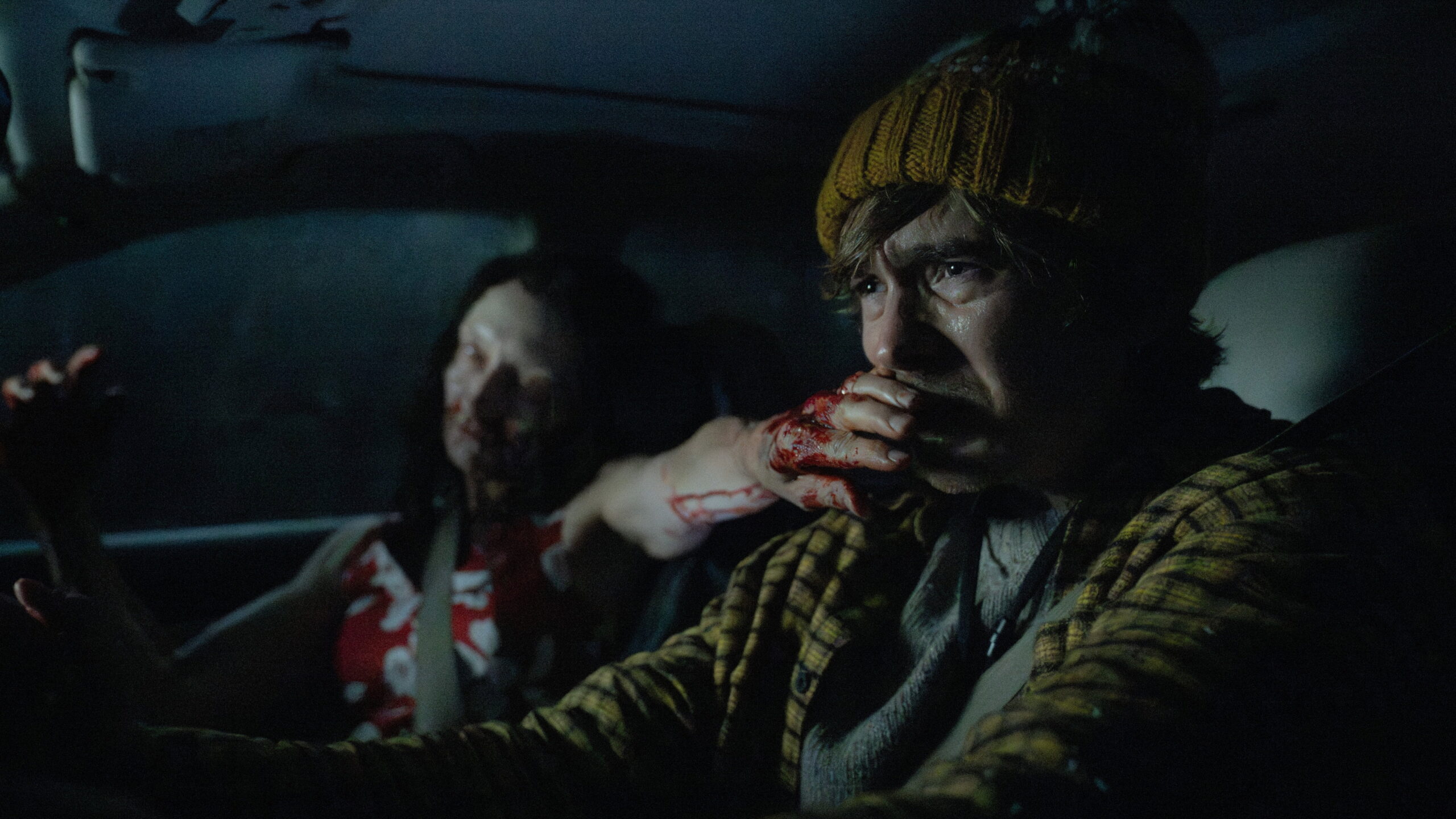
The one-hour-and-a-half runtime of Resident Evil (2026) happened overnight as an exhausting work trip of the main character, Bryan Hodukavich. Staring with Austin Abrams, this film is the second time director Zach Cregger worked with the American actor after his intriguing and popular minor role in Weapon (2025). Personally, Resident Evil completely surpasses Weapon, both in its humor and horror.
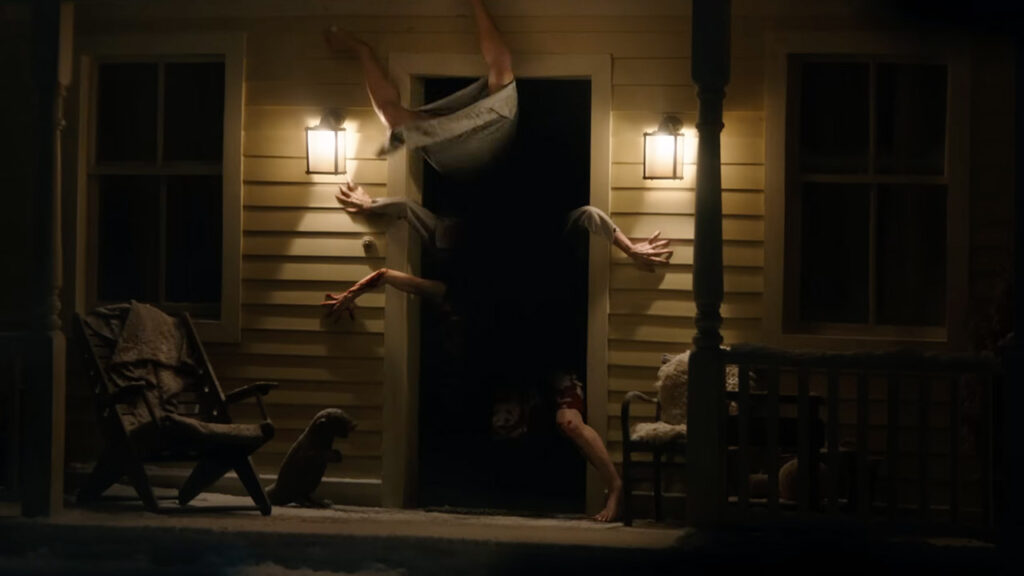
The spider-like fused bodies can’t help reminding me of the rat king zombie in the Last of Us franchise: the numerous infected intertwined and formed a larger mass, which is also incubated at the hospital as a top-tier enemy with high difficulty to defeat. The obese bald man whose stomach is filled with mutant rats with the top head lighting reminds me of the appearance of Baron Vladimir Harkonnen in Denis Villeneuve’s Dune, which probably is a bit far-fetched. But I can’t say it’s impossible to be influenced by the successful recent works.
In these endless nightmare scenarios, this film incorporates several shots with a first-person point of view, resembling the main camera angle inside a horror video game. When Bryan was looking down at his feet standing at an edge, when he was looking out a doorframe with the possibility of an anomaly emerging, the audience were sitting at the edge of their seats. However, the sense of immersion isn’t limited to the type of camera angle. Bryan was forced to continuously make spontaneous decisions in his unexpected extra shift. While watching the film, I was thinking, “This is me when I travel to a new city and keep ending up in a non-walkable place after some impulsive decisions.” The character of Bryan is set to be a regular everyday guy, mixing a little bit of kind-hearted, lethargic, courageous, and impetuous. All of his smart and dumb decisions, good and bad luck, make him easy to relate to and likeable.
With the main character of a regular worker, the choice of making Bryan a white straight man is not a coincidence. This film introduced a new role into the franchise—a medical carrier of the key stabilizer as the frontline at the first outbreak of Racoon City. It aims at a new perspective of the classic franchise after its popular games and adapted movie series, making the new audience also understand and enjoy the plot as hardcore fans. In the history of Hollywood and American cinema, the audience is programmed to relate to the main characters of white straight men as a default setting, while any other identity is a deviation and needs a reason to be. His argument and reconciliation with his girlfriend over the phone is also a deliberate choice to humanize him, displaying his love in daily life beyond the crisis. The identities of other characters with their short screen time are almost like caricatures, especially the Umbrella Corporation employee Paul and the police Maxine. Overweight white Paul was a cowardly hypocrite, refusing to take the responsibility and admitting the nightmare of a situation. Androgynous Black cop Maxine is the silent, competent, and reliable figure but was unavoidably exploited by the greed of a giant corporation, short-lived. At the end, Bryan reached the destination after rounds of narrow escapes and met a dozen of timid scientists hiding in a lab. At the end, Bryan reached the destination after rounds of narrow escapes and met a dozen of timid scientists hiding in a lab. They failed to notice Bryan was infected as they dismissed him and his vital work, likely a result of undervaluing an everyday worker. This contributed to the later panic, and then they were too frightened to inject the cure, a seemingly easier task compared to Bryan’s long trip.
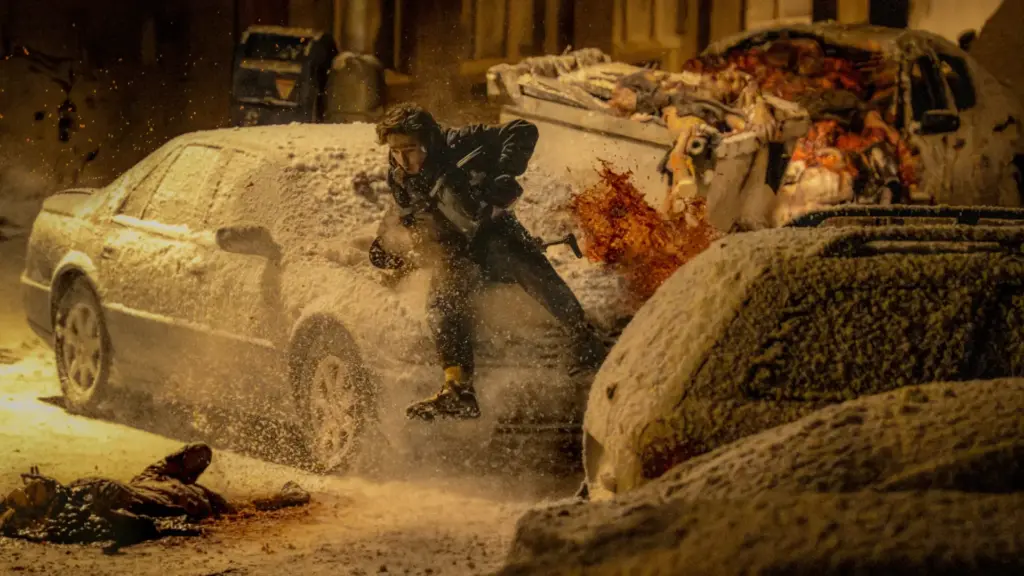
The end was disappointing but doesn’t come as a surprise: the manmade disaster didn’t come to a halt under the same bureaucracy and capitalism. The helicopters came at the end, while the only cure was falling down the abyss, and the last bit of consciousness was slipping out of Bryan’s retina. This despair comes back to the ultimate theme of zombie and apocalypse films—greed and ignorance. The downfall is guaranteed, and more human tragedies have yet to come. Many viewers stated that they resonate with this type of exhaustion and frustration in their work. The dark humour preserved through the film makes it a satire of real work situations and makes the ending more devastating.
Comments