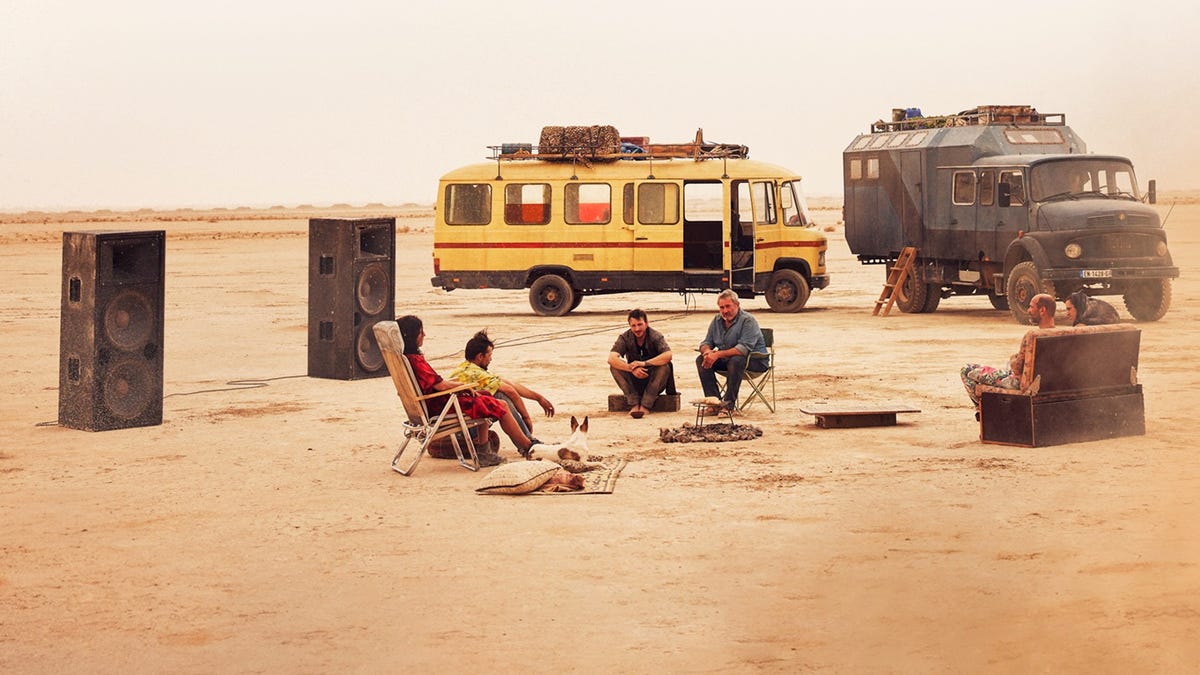
The title ‘Sirāt’ comes from the Arabic “As-Sirāt” and Islamic theology, which means the path one must pass to enter paradise from hell. The story is set in the deserts in southern Morocco. “Southern Morocco Desert” or “Western Sahara”—the name of the location is a controversy, and it’s a place that won’t appear in a travel recommendation list and won’t be covered in travel insurance. Following Luis and his son Esteban in search of the missing daughter Mar, we entered the rave scene of this area.
The geopolitical background is pronounced from the beginning. The military stopped the rave and evacuated the European ravers, with the soldiers speaking French. Luis impulsively followed a small group of 5 Spaniard and French ravers (Stef, Jade, Tonin, Bigui, and Josh) deeper into the desert with an unequipped truck for the possibility of finding Mar in another rave. On the radio, the news reported the ongoing conflicts between two countries and a possible World War III. The group seemed disinterested in this event, yet the conflicts caused a shortage of fuel on the way, forcing them to buy fuel from individual sellers.
With the contemporary rave theme, the camera shows the local landscape and culture without a dialogue explaining the situation, like the scenarios of the deserts and the crowded gas station. Jade entered an empty hut with a small old TV. On its blurry screen, people were circling the Kaaba in Mecca, and Jade silently watched it while standing inside the hut with the prayer chanting faintly playing. Through the rest of the film, the other interactions between the main characters and the local culture are all brief, inexplicit, yet present.
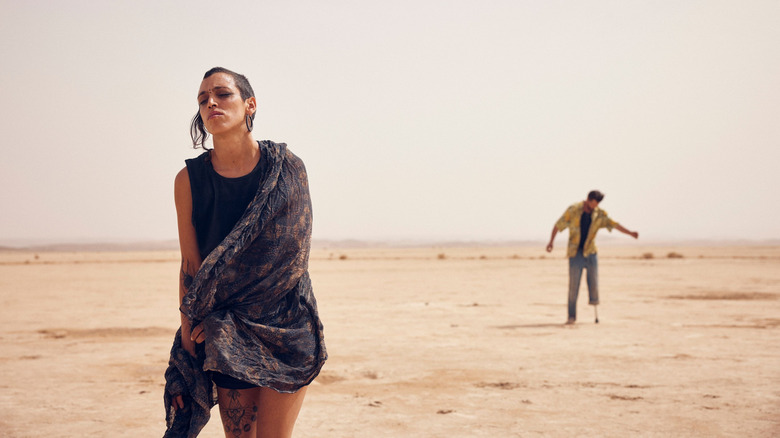
Instead of regional cultures and politics, the diversity presented well in the film is for the people with disabilities. Two main characters, Tonin and Bigui, respectively, have one leg and one forearm amputated. With their disabilities, they are very able: they move, dance, fix stuff, and do tricks as freely as other ravers. The camera didn’t shy away from showing their amputated limbs, and they’re frequently in the center instead. In one sense, Tonin used his leg stump as a clothed puppet to perform a musical number.
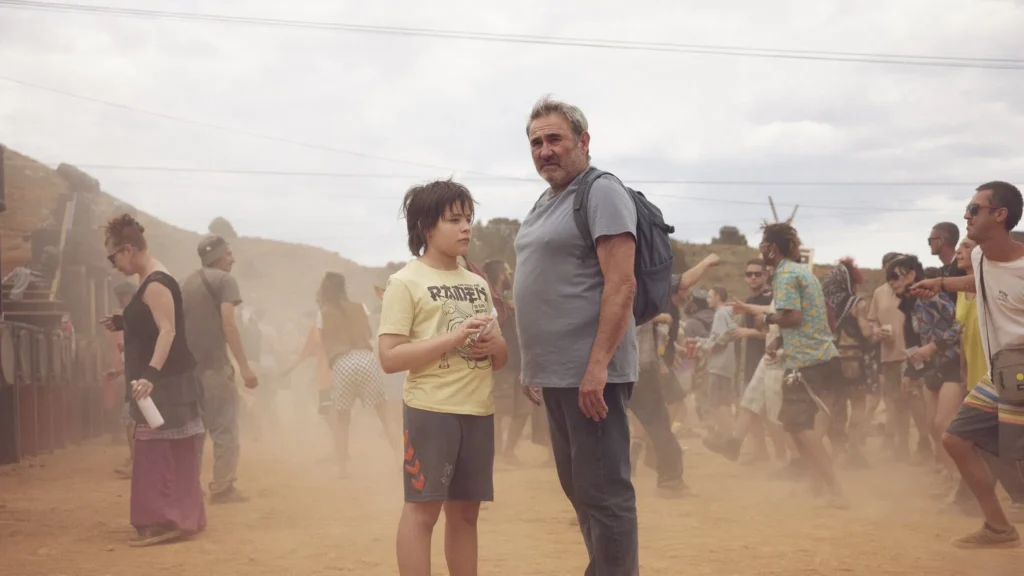
The The bond became stronger between the ravers and Lusi and Esteban by overcoming obstacles together on the road. Lusi began to learn the rave culture and appreciate the trust and support of their found family. Suddenly, Esteban died of an accident, and the tone of the film escalated rapidly. When the remaining group sought help from a sheep herder, he looked confused and scared and then ran away without saying a word. Soon after, Jade, Tonin, and Bigui died by stepping on landmines in the desert, which are results of the ongoing conflicts around the borders.
Given the disputes in this area are rooted in the colonization of North and West Africa by France and Spain, it’s assumed to be an important lesson for these Europeans about family, friends, cultures, and histories, combining the clear tragedies and the geopolitical backdrop. The psychedelic herbs and the techno music blasting from the speakers in the desert were supposed to lead to an enlightenment. However, this film refused to give an answer, which gives it a strange quality. In constant contrast to the prediction, this illogical one-way pathway appears to lead towards a merciless and impassive plateau instead of the paradise.
The only three remaining members—Luis, Stef, and Josh—successfully reached the mine-free rocky area and got on board one legendary Mauritanian train among other locals, wordless and devoid of the transcendence that is expected from the protagonists.
Comments