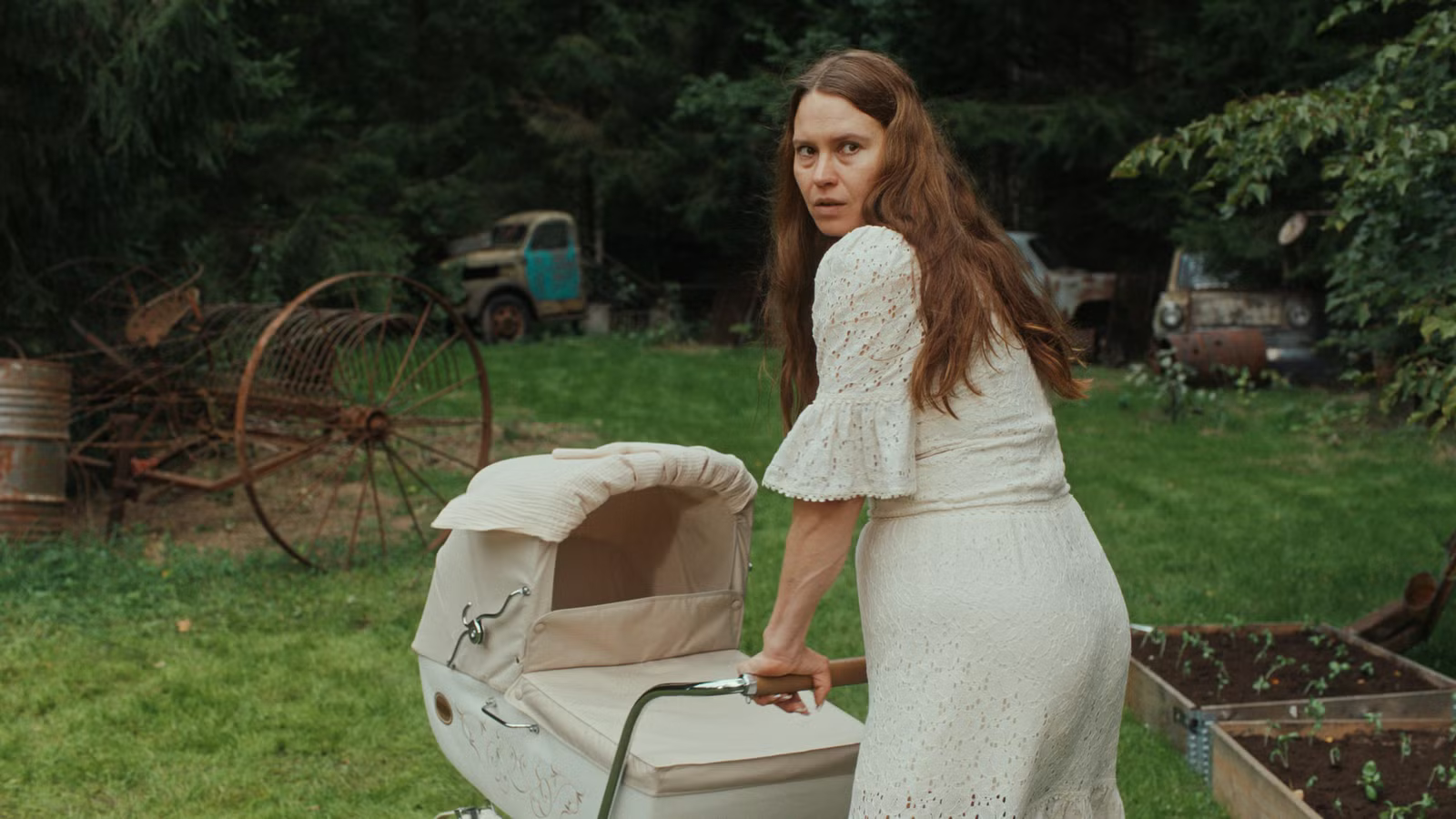
Coralie Fargeat, the director of the much-acclaimed The Substance, once said in an interview that “Being a woman is body horror,” and when you think about the ways we are taught to experience our own bodies, it becomes almost impossible to argue with her. That is perhaps why, when women take control of the camera and explore the physical realities of women’s lives, horror can feel like the genre that speaks most naturally and most honestly to those experiences. From menstruation to pregnancy, childbirth to aging, we are repeatedly asked to accept pain, transformation, and bodily vulnerability as inevitable. At the same time, society demands that these same bodies remain controlled, desirable, productive, and socially acceptable.
Women filmmakers do not need to invent monsters. By turning the camera inward, directors like Fargeat, Julia Ducournau (Raw, Titane), and Hanna Bergholm reveal that the true horror can be the experience of living in a body that is constantly being judged, transformed, and claimed by others. Their films are frightening not because our bodies are grotesque or monstrous, but because we are so often denied complete autonomy.
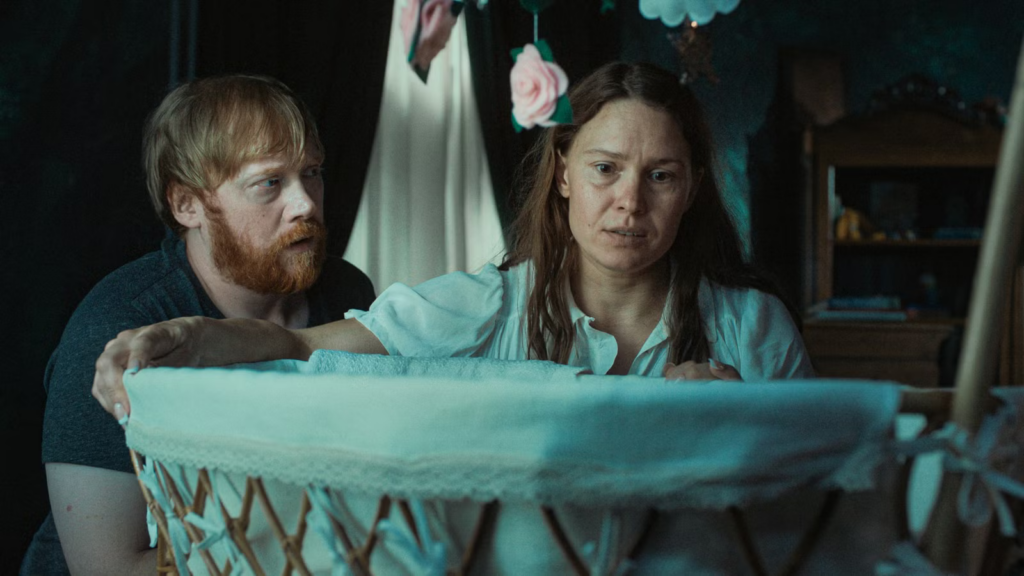
This physical alienation is apparent in Hanna Bergholm’s Finnish folk and body horror Nightborn. With its visceral childbirth scene, the movie immediately strips away the romance of motherhood and exposes the raw, painful reality of becoming a mother. For our protagonist, Saga (Seidi Haarla), the horror is not simply the strange, unearthly nature of her newborn baby. It is also the terrifying recognition of how little control she feels she has over her own transformed body and new identity. The baby is at once hers and strangely alien to her: a creature that has emerged from her body but feels more like it belongs to the wild nature that surrounds them than to her.
Nightborn does not suggest that motherhood itself is inherently horrifying. Instead, it explores what happens when the social expectation that motherhood should be natural, instinctive, and fulfilling meets the complicated reality of a woman who does not immediately feel that way. Saga is expected to become a mother effortlessly, to recognize her child, to love him instinctively, and to accept the sacrifices that come with motherhood. When she cannot, the resulting shame becomes another source of horror.
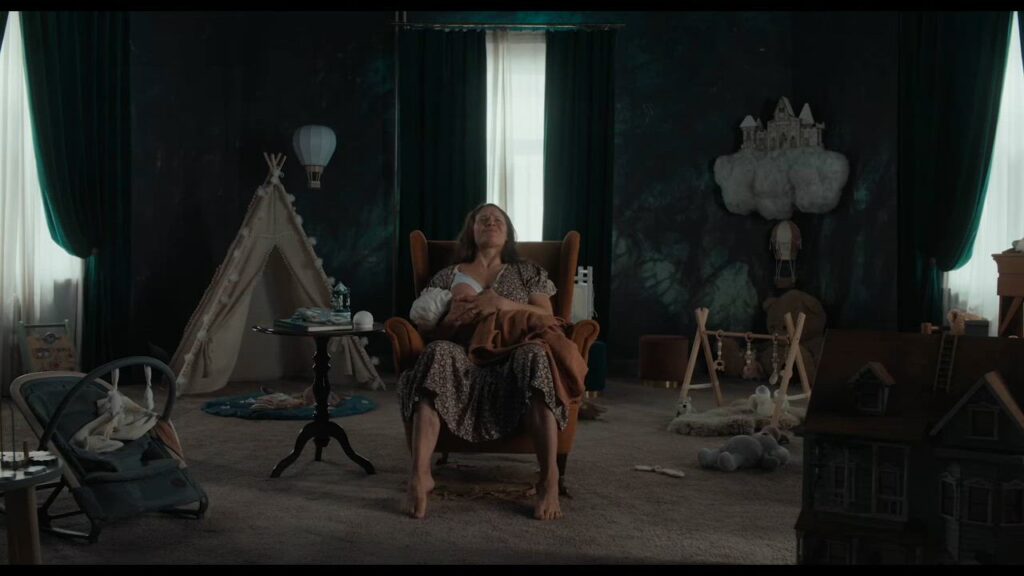
Much like many new mothers, Saga experiences this struggle in isolation. Having a supportive partner in Jon (Rupert Grint) does not necessarily mean that he understands what she is going through. His attempts to create stability and restore their home can even feel like an extension of the expectations surrounding Saga: everything must look right, the family must function properly, and motherhood must fit neatly into that picture. Saga, meanwhile, is struggling with feelings she cannot easily articulate because admitting that having a child has not brought her the expected joys and the much-expected motherly love risks making her seem like she has already failed in her role when she’s only at the beginning of motherhood. She is trapped between the mother she thought she would become and the mother she actually is.
Throughout Nightborn, I found Bergholm’s use of visual symbolism exquisite. The crumbling house that Jon restores represents his attempt to construct a picture-perfect domestic sanctuary, while the savage greenery of the surrounding Finnish forest constantly threatens to breach its walls. The contrast between the carefully controlled home and the untamed natural world mirrors Saga’s own struggle: she is expected to contain and control both herself and her new family, even as her body and emotions resist that control. At the center of this conflict is the infant himself, Kuura. He feels entirely alien to Saga, a feeling that Bergholm reinforces throughout the movie by choosing not to show his face. Yet their connection creates a disturbing dynamic in which she is also the person who understands him better than anyone else. Even her own body betrays this connection, altering itself whenever she tries to distance herself from him.
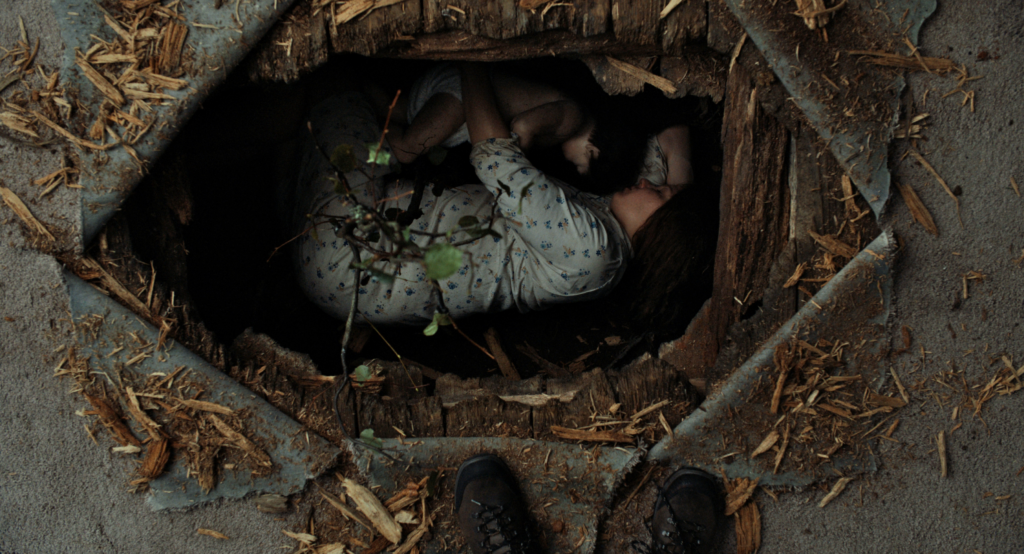
Most poignant, however, is the recurring motif of the tree growing beneath the floorboards. No matter how many times it is cut down and removed, it relentlessly pushes through the cracks. The tree can be read as a metaphor for the inescapable physical and emotional reality of motherhood: a bond that continues to demand complete surrender even when Saga tries to suppress or escape it. It can also represent something more complicated, such as the impossibility of separating the woman from the societal expectations, responsibilities, and transformations of motherhood.
This is precisely why I believe cinema needs more feminist approaches to horror. Through the literal intrusion of the forest into the domestic space, Bergholm does not simply depict a mother losing her mind. She visualizes the psychological consequences of a woman struggling against a role she is expected to accept without question. When Saga looks at her infant son, she is not simply seeing a traditional bundle of joy. She is confronted with a physical manifestation of how profoundly her life, body, and sense of self have been altered.
Bergholm, Fargeat, Ducournau, and a few others achieve something remarkable by using horror to depict these intimate experiences. They show that the grotesque can exist within the most socially celebrated aspects of womanhood. Pregnancy, motherhood, beauty, aging, desire, and bodily transformation can all become sources of horror when we are denied the freedom to determine what our bodies mean to us.
When women filmmakers turn the camera inward, body horror becomes more than an exploration of the grotesque. It becomes a way of reclaiming the realities that women are often expected to endure silently. The horror is not that our bodies are monstrous. It is that we are often treated as if we belong to everyone except ourselves.
Comments