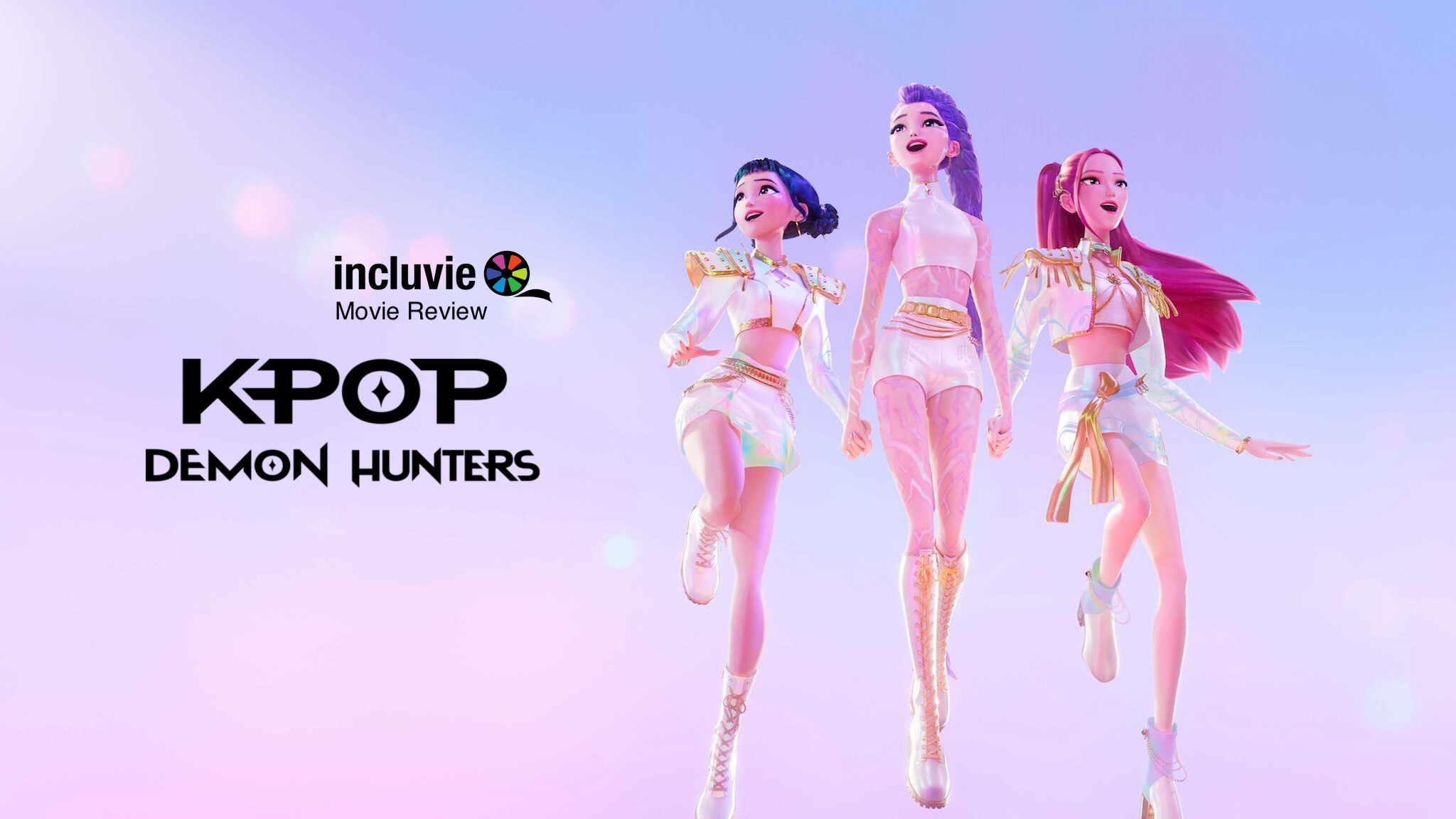
How is K-Pop Demon Hunters – an animated Netflix original – topping charts for 7 months straight and counting, in both movies and music? How has it become so fascinating and compelling that it leads middle-aged white American dads to create Tiktoks about how it initiated them to K-Pop as if it’s a fraternity or rite of passage? And what does this movie even mean?
Let’s take a look at the themes and symbolism. The symbolism may be classic, but the portrayal within the story and graphics really make them pop. Pun not intended.
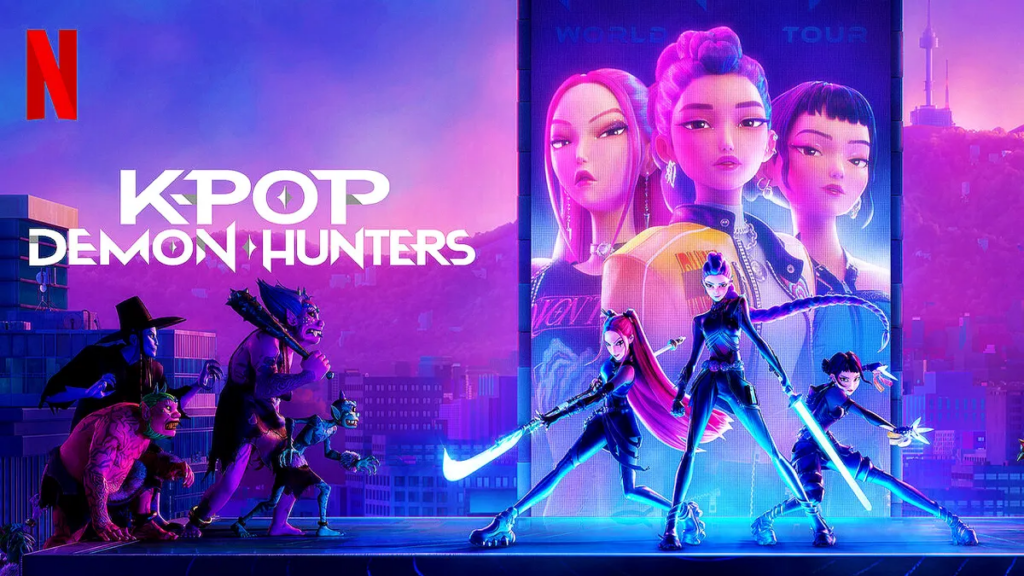
Three Asian girls in the girl band HUNTR/X are secretly protecting all of us in the world by killing demons… using K-pop, sass, and style! Throw in some quintessential girl power and friendship trios, and ayyyy – this works!
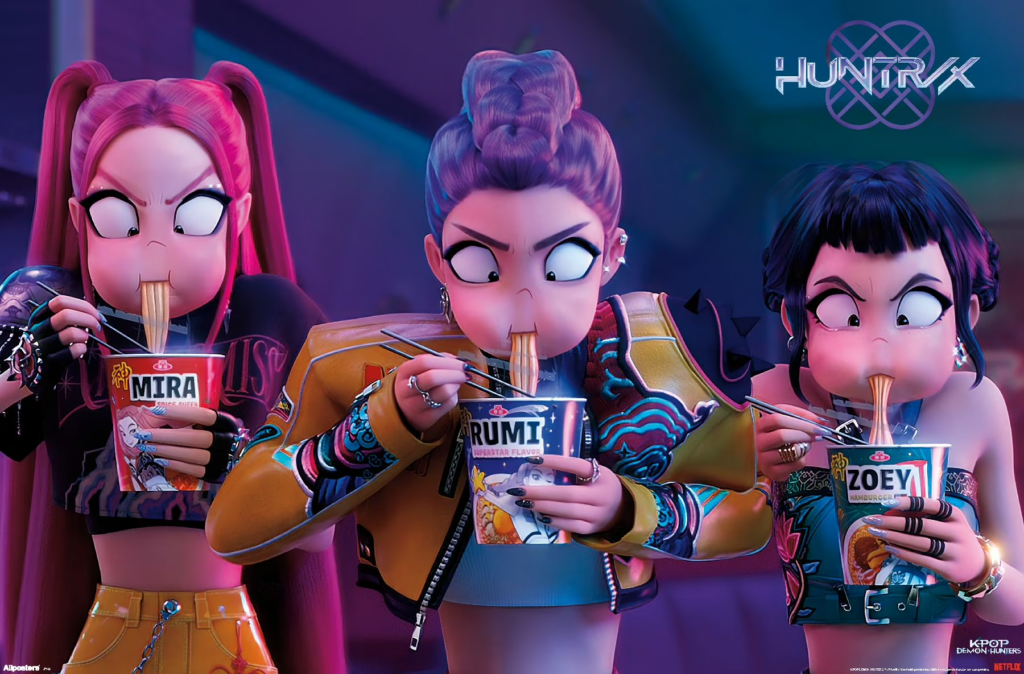
Korean pop culture has mastered emotions as both a scientific field and an artistic revolution. Think of how K-Pop and K-Dramas have taken over the world. How? Simply put — they are addictive. How are they addictive? They make your emotions go in all different directions, without a beat in between, never knowing what will come next. Korean creatives know how to make you cry snotty tears, identify yourself as the main lead and underdog, forge personal vendettas against the villains, giggle like a little kid, and basically… become obsessed. And yes – Netflix made this movie. But much of the cast and crew are Korean or Korean American.
The Symbolism
Demons represent the shame and hatred within yourself that is so scary you can’t even peek to see or articulate it. The shame is so ugly that you can’t look it in the eye. The ugliness of that shame is personified in our hero Rumi, when her shame moves past the scar phase, and her demons start taking over her soul.
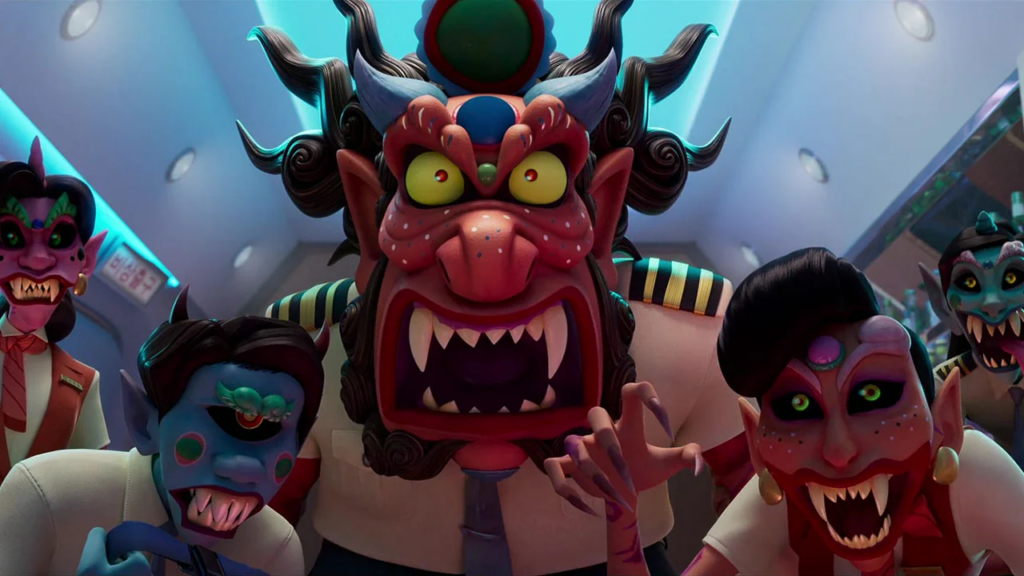
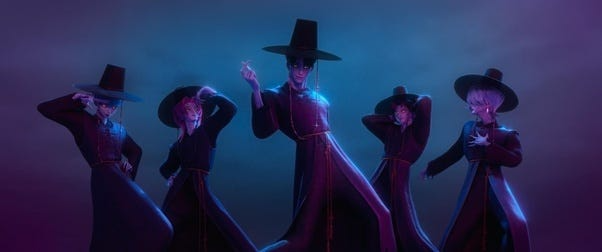
The scars on Rumi are the embarrassment and mild shame she has about her biology and heritage. Her father was a demon – someone who had so much moral injury that he was overtaken by his demons. What exacerbated the scars and caused them to spread over her entire body was partly the original shame, and partly a compounding effect: shame about her shame and the scars themselves. The scars also represent pain, trauma, misery, and hurt. When the scars get big enough, you start turning into an actual demon.
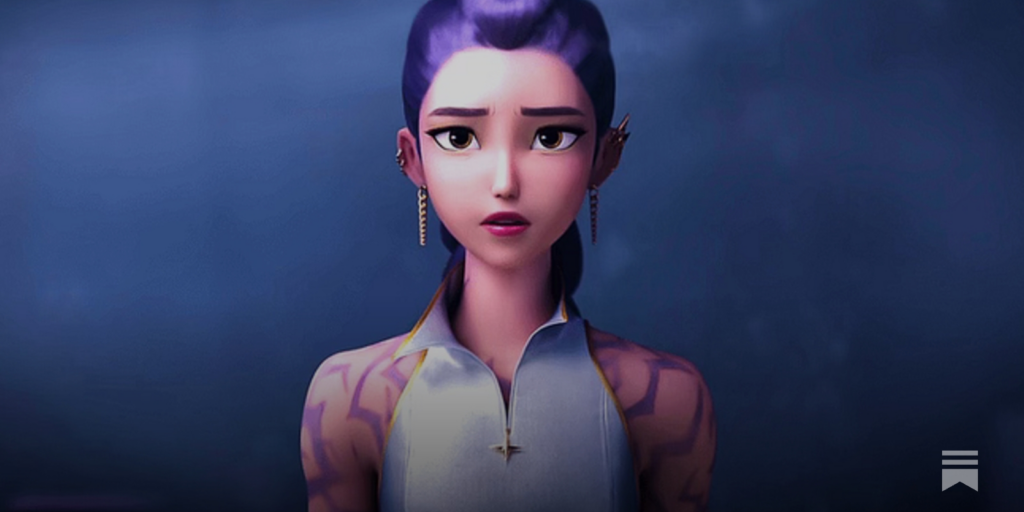
The patterns. “Nothing can change until your patterns are gone,” Celine admonishes Rumi. She means: wait until you’re perfect before you can live life normally and freely. Then you can go to the bathhouse and be yourself with your friends — but not until “yourself” is perfect and normal. Similar to scars, patterns are your patterns of behavior – the bad ones, in this context. This represents what is unfortunately lectured to many of us – and internalized by many of us –erroneously. “Don’t date until you’ve healed yourself (your patterns).” “Wait until you’re financially wealthy (your financial patterns) before starting a serious relationship.” More common in older generations: “Work hard your whole life for 50 years (work-ethic patterns) until retirement before traveling and relaxing and enjoying yourself.” Then there are uniqure patterns we each personally have too. When the patterns start to show, I see the pain that starts to grow.
Zoey’s demons – called out by Healer Han, which she also voices towards the finale when the Saja Boy influence zombifies / demonizes everyone. Zoey fears she’s too eager to please, that she’s annoying.
Mira’s demons – also illuminated at the same points, though we as the audience can sense it throughout – fears she’s too blunt, difficult, sometimes too aggressive or standoffish.
Rumi’s demons – “a hunter who is part demon,” as Jinu calls out. She’s the hero, with a dark side. She’s fighting evil in the world, yet she believes she has some evil within herself.
On the good side – Love and Camaraderie and K-Pop
K-Pop music. This represents the joy, excitement, goodwill, and soul within you — within all of us. Korean pop loves their Seoul 🙂 Maybe that’s why they embody it so well. K-Pop is camaraderie, trust, belief in yourself and your own goodness, and love for your friends, your people, and for all of humanity.
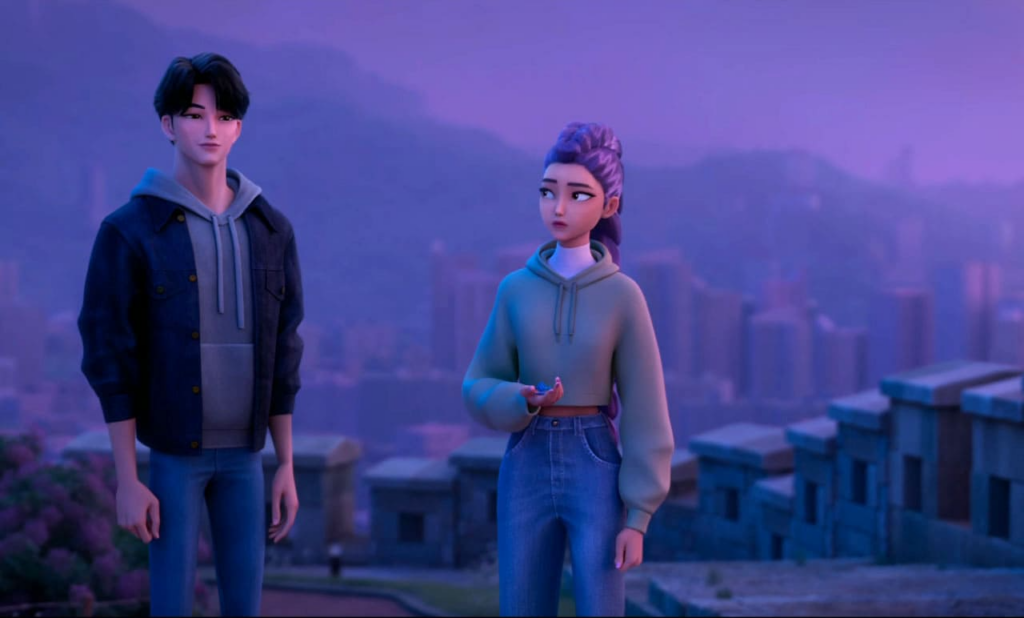
Love – Rumi with Jinu. Rumi and Jinu are not perfectly good or healed people when they fall in love. But that imperfection is actually what ignites the spark. Rumi’s flaws are more minor – hiding her shame from her teammates, causing disharmony and skipped shows due to her secrets. Jinu’s are more major – abandoning his family for the king’s riches and comfort. Another component of their bond is safe vulnerability. I don’t believe vulnerability is always a good thing, as preached by social media and pop-culture truisms without context. Safe vulnerability is important. Seeing the good and redemption in each other.
In modern culture, one would be quick to label their scars and patterns as “red flags” or “major red flags” – next! But that’s not how love works. Love isn’t about overlooking red flags, it’s about understanding your partner’s patterns and scars – and healing them. Jinu says he can’t hear the bad voices in his head anymore. Rumi says her voice came back. This is what it sounds like~
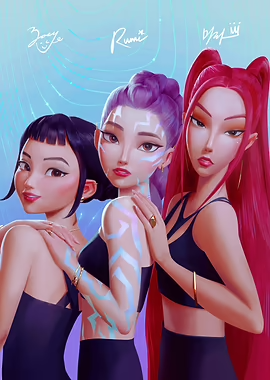
Camaraderie – Rumi with Zoey and Mira. Similar to with Jinu, real friends can see your patterns and scars. They don’t just love you despite them, they love you because of them. The scars are part of you — just as much as your joy, laughter, humor, generosity, and cheer are. Again, I don’t support reckless vulnerability. Not everyone is a “safe person” or a good friend in real life. Sometimes you share your scars or patterns, but judgmental, unsafe people see them as red flags and vanish.
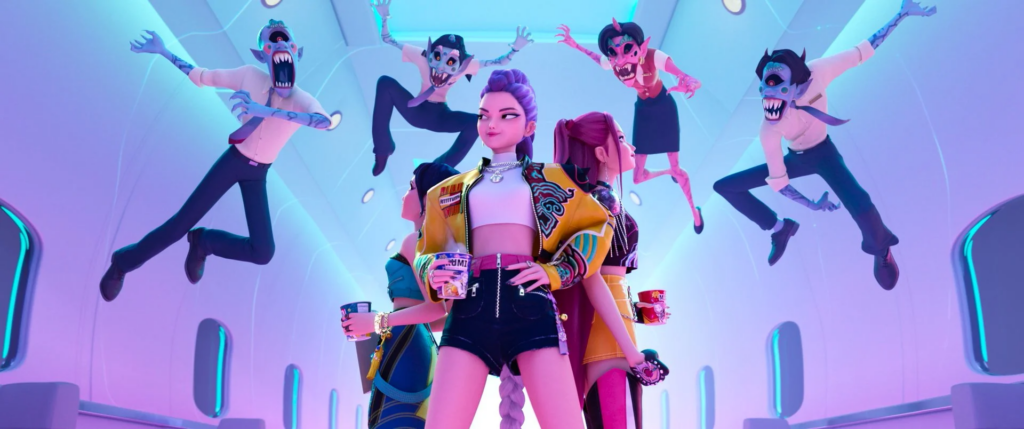
That was the fear Rumi had. She couldn’t risk testing her friendship for the chance that she might devastatingly discover that they would leave her. People do this all the time. And that’s honestly a major crux of the loneliness epidemic. It’s not just isolation caused by social media, digital channels, and a million apps – it’s that we’ve been conditioned to reject people faster than we can even notice a scar or a pattern.
I want to talk about the comedy, the music, and the graphics too – but I may add that later. This movie is so on point.
Comments